

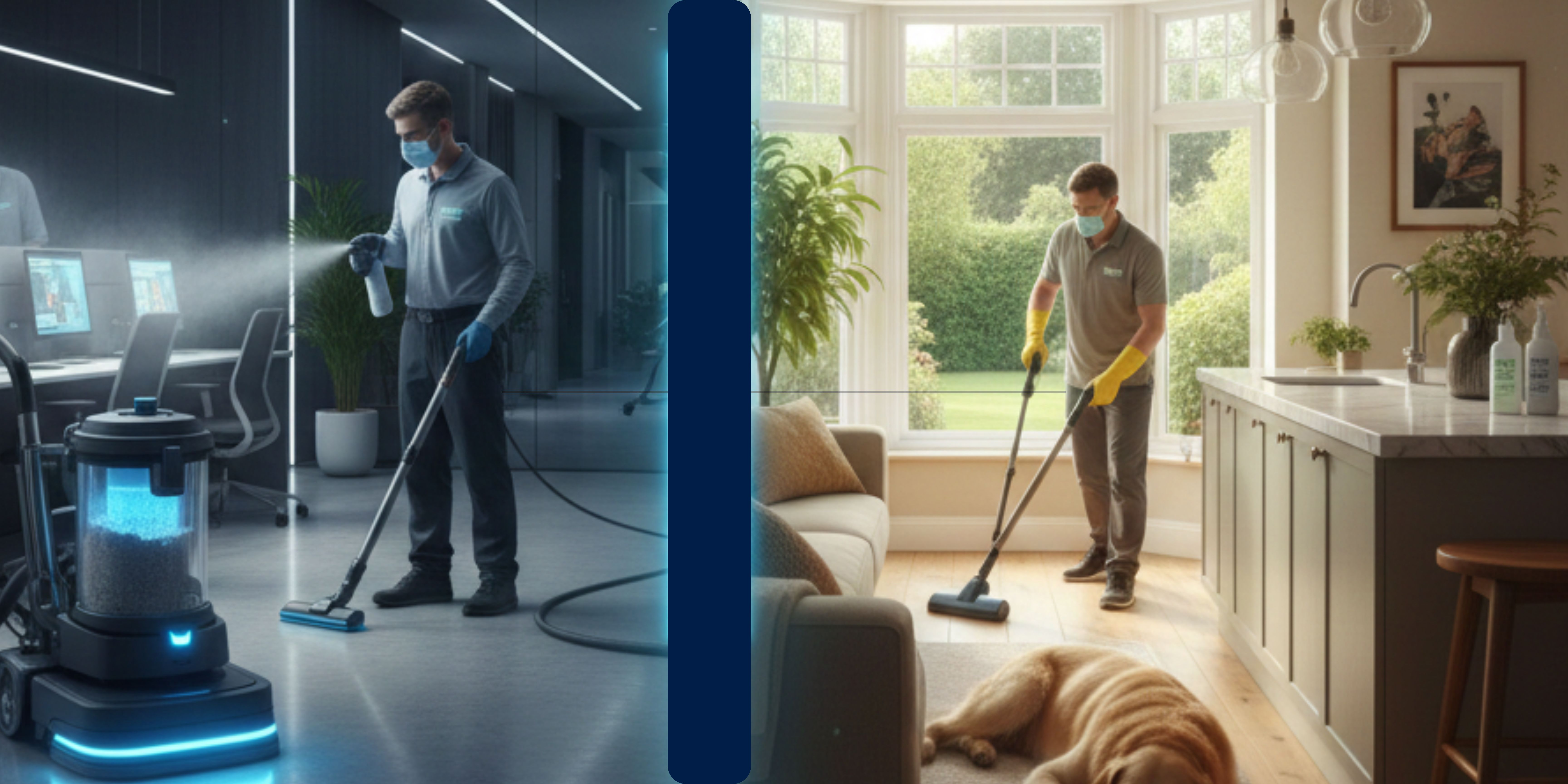
Residential vs Commercial Cleaning Services in 2026
In 2026, the cleaning industry continues to evolve at a rapid pace — driven by new technologies, changing customer expectations, and a deeper focus on sustainability and health. For many homeowners and business owners alike, the terms “residential cleaning” and “commercial cleaning” may sound similar, but in reality, they are fundamentally different services tailored to very different needs.
At UFCleaning, we specialize in both sectors, helping clients maintain spaces that are not just clean — but safe, comfortable, and optimized for their unique environments. In this blog post, we’ll break down the key differences between residential and commercial cleaning services, explore why those differences matter, and help you choose the right service for your needs in 2026.
What is Residential Cleaning?
Residential cleaning services focus on homes, apartments, and other living spaces. These services are designed to keep living areas clean, organized, and comfortable — usually on a recurring schedule like weekly, bi-weekly, or monthly.
Common residential cleaning tasks include:
- Dusting and wiping surfaces
- Vacuuming and mopping floors
- Cleaning kitchens (countertops, sinks, appliances)
- Sanitizing bathrooms (toilets, showers, mirrors)
- Emptying trash and recycling
Most people think of residential services as “regular house cleaning,” but in 2026 these offerings have expanded to include more specialized options such as:
- Move-in/move-out cleaning
- Deep cleaning packages
- Eco-friendly green cleaning
- Pet-friendly sanitization
Learn more about our residential options: Residential Cleaning Services in London
What is Commercial Cleaning?
Commercial cleaning services are geared toward businesses, offices, retail spaces, industrial facilities, and public buildings. These environments demand different cleaning strategies, larger scopes of work, and often advanced equipment or certification.
Typical commercial cleaning duties include:
- Floor care (buffing, waxing, carpet cleaning)
- High-touch surface disinfection (doorknobs, elevator buttons)
- Restroom sanitation at scale
- Breakroom and kitchen cleaning
- Waste management and recycling
Because businesses are held to strict standards — whether for employee health, customer perception, or regulatory compliance — commercial cleaners often work after business hours, use industrial-grade disinfectants, and follow specific safety protocols.
1.Scope of Work and Scale :
One of the most visible differences between residential and commercial cleaning is scope and scale.
Residential Cleaning-
- Focuses on individual rooms and personal items
- Emphasizes comfort and appearance
- Typically involves one cleaner or small teams
For example, cleaning a 3-bedroom home might take a couple of hours, focusing on comfort areas like bedrooms, kitchens, and living rooms.
Commercial Cleaning -
- Covers large square footage (offices, lobbies, restrooms)
- Includes industrial tasks like floor maintenance
- Often requires teams of professionals working in shifts
Commercial spaces might require specialized tools — such as ride-on floor scrubbers or HEPA filtration vacuums — because of the higher foot traffic and more complex surfaces.
2.Frequency and Scheduling :
The needs of homes and businesses differ dramatically when it comes to scheduling:
Residential Scheduling - Most homeowners prefer predictable schedules — weekly, bi-weekly, or monthly. Flexibility is important to fit around family life, events, and personal routines.
Commercial Scheduling - Commercial clients often require:
- Daily cleaning
- Nightly shifts (to avoid disrupting staff and customers)
- Weekend or off-hour rotations
At UF Cleaning, we make flexible scheduling easy for both homes and businesses. Book residential cleanings online, and for commercial spaces, work with our team to design a schedule that fits your operations.
Schedule your service: Book a Cleaning in London
3.Training and Expertise :
Residential Cleaners - Residential cleaners often deliver friendly, detail-oriented service perfect for homes. While they are skilled at organizing and caring for personal spaces, they usually do not require specialized certifications.
Commercial Cleaners - Commercial environments require:
- HSE or other regulatory compliance
- Training in industrial-strength chemicals and equipment
- Knowledge of workplace safety and hygiene standards
This deeper specialisation makes commercial cleaning more intensive and highly technical compared to residential cleaning.
4.Equipment and Supplies :
Residential Tools
- Standard vacuums and mops
- All-purpose cleaners and household disinfectants
- Microfiber cloths, sponges, brushes
Commercial Tools
- Floor scrubbers and polishers
- Electrostatic disinfecting sprayers
- HEPA filtration vacuums
- Industrial-grade sanitizers
Commercial cleaning often involves specialty tools designed for safety and performance in high-traffic environments — equipment homeowners rarely need.
5.Customisation and Extras :
Both types of services offer Customisation , but the focus changes:
Custom Residential Services
- Decluttering and organizing
- Laundry assistance
- Deep carpet or upholstery cleaning
Custom Commercial Services
- Conference room sanitization
- Retail space floor polishing
- Big-event cleanup and reset
At UF Cleaning, we tailor each plan to your exact needs, whether that’s making your home feel refreshed or keeping your business environment spotless and professional.
6. Health Standards and Regulations :
By 2026, health and safety have become top priorities across both residential and commercial cleaning — but the emphasis differs:
Residential Safety - Focused primarily on:
- Minimizing allergens
- Reducing household bacteria
- Pet-safe and eco-friendly solutions
Commercial Safety- Often regulated by:
- UKHSA or HSE guidelines
- Corporate health mandates
- Industry-specific protocols (e.g., medical facilities or food prep areas)
Commercial cleaners must stay up-to-date with evolving regulations, especially in sectors like healthcare, education, and food service.
7. Pricing Structures : Residential cleaning pricing usually depends on:
- Home size
- Level of cleaning
- Frequency of visits
Commercial pricing often involves:
- Square footage
- Number of employees or occupants
- Specialized service add-ons
With more variables and higher operational costs (equipment, labor, compliance), commercial services are typically more expensive than residential cleaning.
Get a quote: Request a Free Estimate !
8. Sustainability Trends in 2026
Today’s customers — homeowners and businesses alike — care deeply about sustainability. Both residential and commercial services now offer green cleaning options, but commercial clients often require more advanced eco-solutions, such as:
- Low VOC disinfectants
- Water-saving technologies
- BREEAM -certified cleaning practices
UFCleaning is proud to offer eco-friendly options across all services, helping protect your health and the environment.
Which Service Is Right for You?
Here’s a quick guide to help you decide:
Choose Residential Cleaning if:
✔ You want regular maintenance for your home
✔ You need occasional deep cleaning
✔ You value personalized, detail-oriented service
Choose Commercial Cleaning if:
✔ You manage a business or high-traffic environment
✔ You need compliance with health or safety standards
✔ You want customized daily or nightly services
No matter your needs, UF Cleaning has a solution designed specifically for you.
While residential and commercial cleaning services share a common goal — keeping spaces clean — they differ significantly in scope, scheduling, equipment, expertise, and pricing.
In 2026, those differences are more important than ever. Whether you’re a busy homeowner looking to free up time or a business owner committed to creating a healthy environment, choosing the right service ensures you get the most value with the highest quality results.
Ready to get started? Contact UF Cleaning Today !